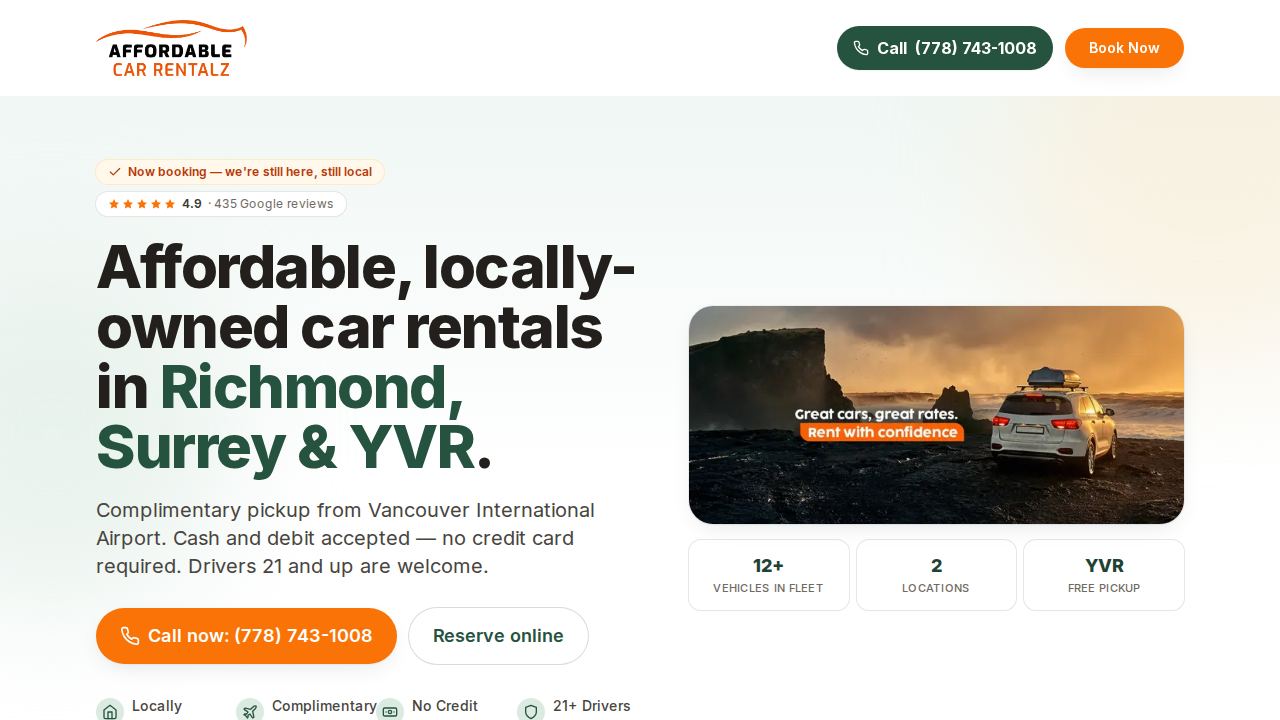
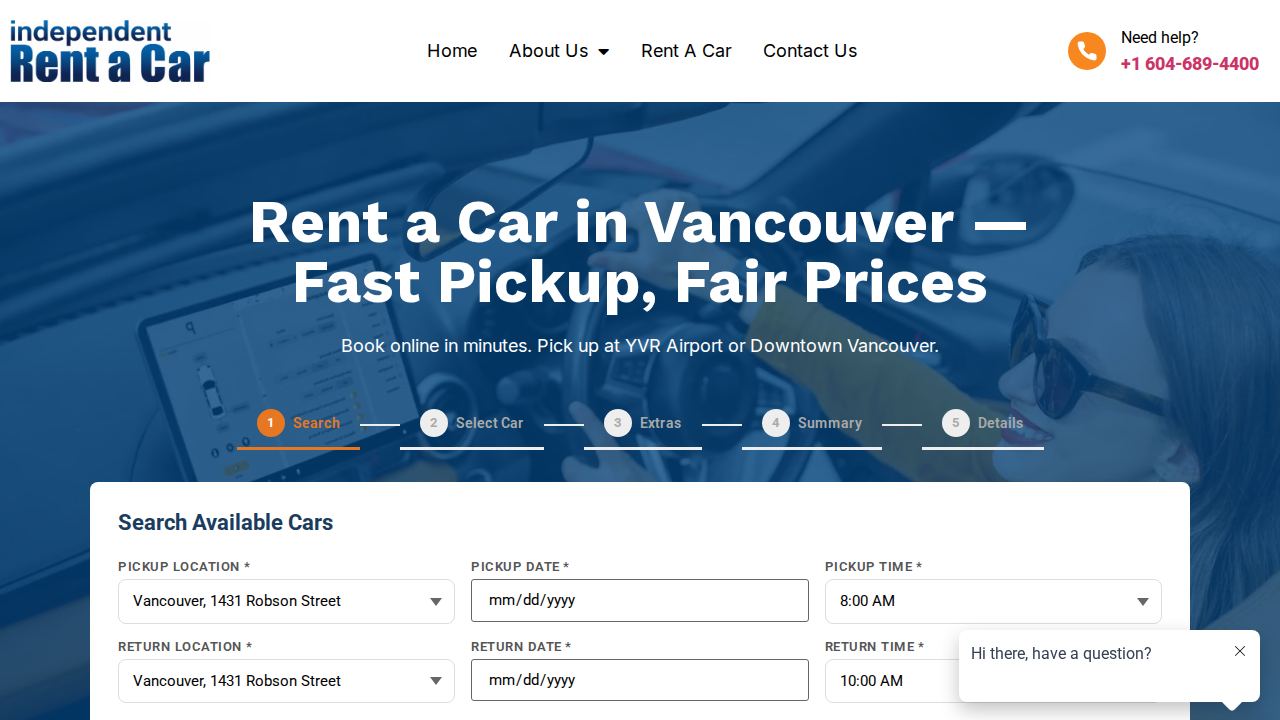
Car rental website design starts with the decisions a renter needs to make. Vehicle categories, capacity, pickup information, requirements, and the booking handoff should work together. Our work with Affordable Car Rentalz and Car Rental Vancouver gives you relevant projects to explore.
Explore the experience
What does your renter need to know next?
Follow three useful parts of the journey using saved project previews. These previews do not show live inventory or rates.
Choose a vehicle
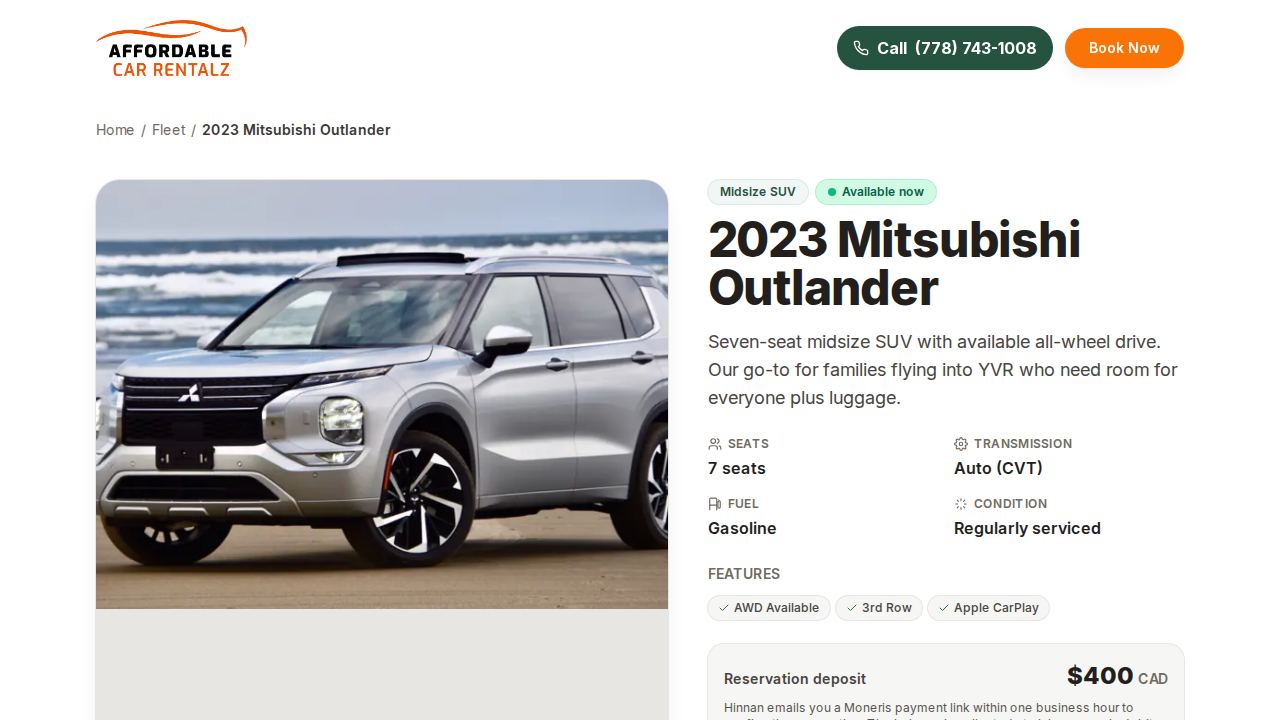
Make useful differences easy to compare.
Organise vehicle categories and approved specifications around the trip. Capacity, luggage needs, and practical features can help someone narrow the choice before moving into the booking system.
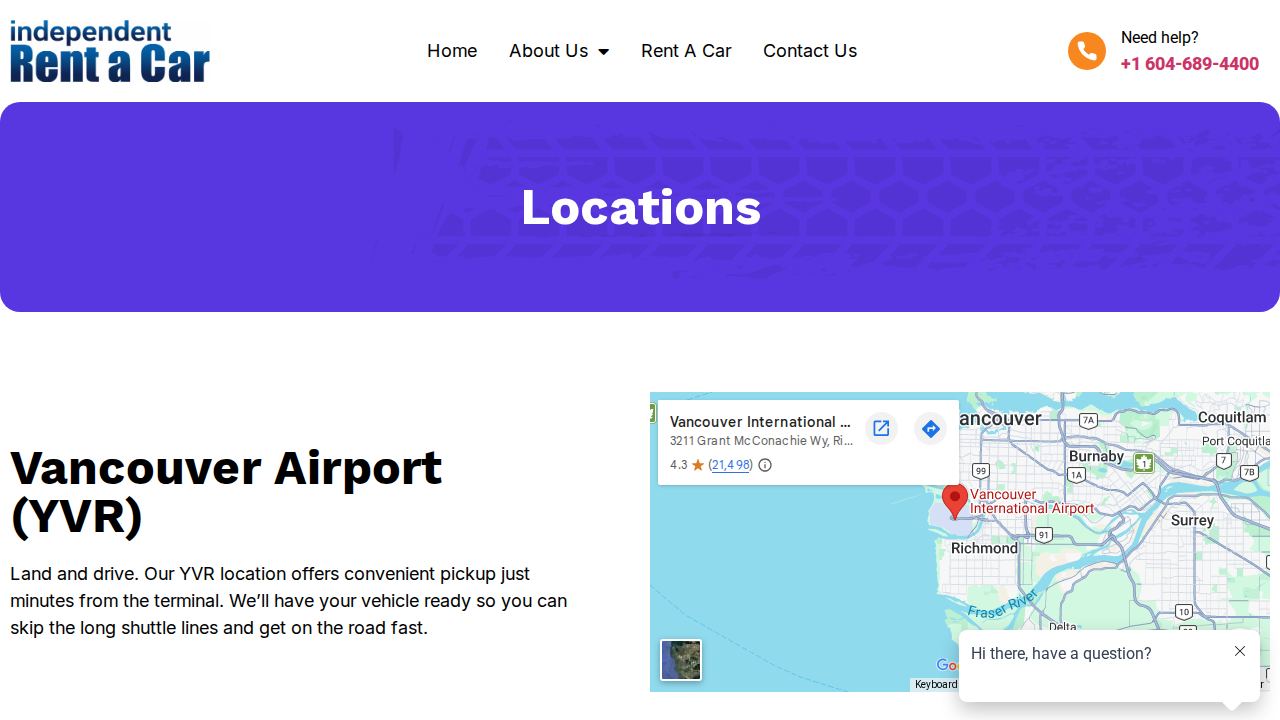
Give pickup locations, directions, hours, and approved collection requirements a clear home. Information that affects a booking belongs close to the decision, rather than buried in a disconnected FAQ.
We map what the website shows, what the reservation provider controls, and how a customer moves between them. Availability and rates must come from an authorised source; a static preview is never a live quote.
We plan category and vehicle content around the renter’s questions. Your team confirms specifications, imagery, and terms. Reusable page patterns help keep the experience consistent as the fleet or offer changes.
Location information that supports the trip
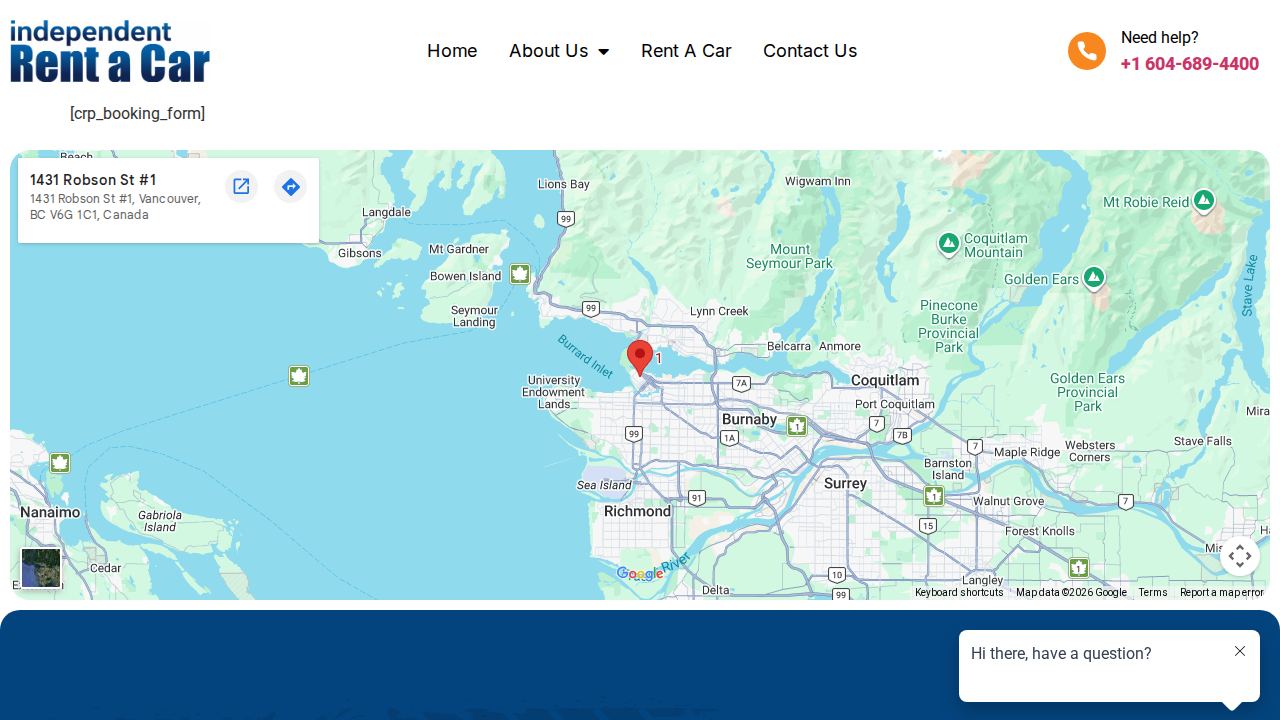
Airport, city, and other pickup options need accurate content and a clear connection to the booking journey. We organise useful location pages and internal links without inventing a branch or implying availability that has not been supplied.
Booking with explicit responsibilities
The website and reservation platform may be operated by different parties. We document the handoff, provider access, validation, and error paths within the agreed scope. A fleet-management system or custom reservation engine is a separate software engagement.
Search continuity through a rebuild
A rental website often has established vehicle and location pages. We inventory the useful URLs, plan redirects where needed, and check content, links, metadata, and key visitor paths before and after release.
We review your current setup, your priorities, and the people who need to use it. You get a defined first phase and clear dependencies.
02
Review the work
You see the agreed direction and working pages as they develop. Decisions and feedback are tied to the scope and the people responsible.
03
Check and hand over
We verify the agreed journeys, resolve release issues, and give your team the access and guidance needed to run the result.
Before you decide
Your questions, answered.
Have you built rental websites?+
Yes. Affordable Car Rentalz and Car Rental Vancouver are two relevant projects. Their case studies describe the website, search, and booking-journey work rather than implying that every underlying reservation system was built by Grow Wild.
Can you work with our current booking provider?+
We start by reviewing the provider’s supported options and your authorised access. The proposal records the integration or link approach, responsibilities, and any limitations that affect the customer experience.
Will the website show live prices and availability?+
Only when an agreed integration supplies that information reliably. We distinguish a vehicle catalogue from live inventory and define how unavailable or stale data should be handled.
Can we keep our existing vehicle and location pages?+
We review the content and search value before deciding what to retain, improve, combine, or redirect. The migration plan makes those decisions explicit and includes representative checks at launch.
May we use analytics to understand which pages help visitors? Optional analytics stays off until you choose. Your inquiry works either way. Cookie details.